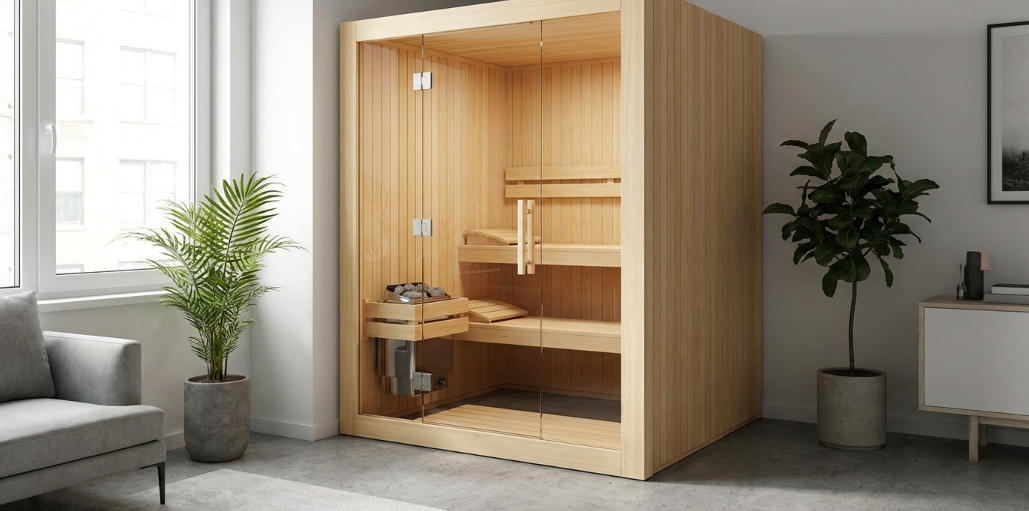
The five mistakes that show up most often when people buy a small sauna are sizing the heater to floor space instead of cubic footage, picking electric or wood heat for the wrong location, ordering before getting an electrical quote, choosing cheap wood over cedar or properly kiln-dried hemlock, and buying a cabin sized for one when two people will actually use it. Any one of these can turn a $3,000 to $6,000 purchase into a cabin that never quite reaches temperature, costs more than expected once installed, or gets replaced within a few years. Catching them before you order is far cheaper than fixing them after.
Is sizing the heater to floor space instead of cubic footage the biggest mistake?
It’s close to the biggest, and it’s the one that’s hardest to notice until the cabin is already installed and running hot but never quite hitting temperature. Heater output is sold in kilowatts and should be matched to interior cubic footage, not the square footage printed on a floor plan. A cabin with a sloped ceiling, a large glass door, or extra headroom loses heat faster and needs more capacity than a low, tightly sealed box with the exact same footprint. A common sizing rule is about one kilowatt for every 45 to 50 cubic feet of well-insulated space; buyers who instead pick “the 4×6 heater” off a chart without checking their own ceiling height and glass area often end up a full kilowatt short, which shows up as a sauna that runs constantly and still tops out 15 or 20 degrees below what it should.
Electric or wood heat, and does the wrong choice ruin a small space?
Both heat types work well in the right setting and poorly in the wrong one. Electric heaters reach a set temperature automatically, need no ash cleanup, and suit an indoor room, a finished garage bay, or anywhere close to the house. Wood-fired heaters deliver a different, often more intense heat that plenty of experienced users prefer, but the 45 to 60 minute preheat, daily ash removal, and stored firewood make more sense for a freestanding outdoor cabin than for a small enclosed space near a living area. Buyers who choose wood heat for convenience or aesthetics without weighing the daily maintenance often stop using the sauna within a year because the ritual of lighting and tending a fire competes with an already busy schedule.
Why skipping an electrical quote before ordering costs buyers the most
Most heaters above roughly 4.5 kilowatts need a dedicated 240-volt circuit, and the price of running one swings widely depending on distance from the electrical panel and whether the panel itself has spare capacity. Buyers who order a cabin and heater first, then call an electrician after delivery, sometimes discover the wiring alone costs $800 to $1,500 more than the entire budget they had set aside for the project. Comparing installed pricing rather than unit price alone helps avoid this; specialty dealers such as SweatDecks.com list heater wattage clearly by model, which makes it possible to get an accurate electrical estimate before placing an order rather than after the cabin has already arrived.
Cedar vs cheaper wood, does the savings actually last?
Western red cedar and Nordic spruce cost more upfront than low-grade pine or unspecified “premium wood” substitutes, but both resist warping and resin release far better under the repeated heat and humidity cycling a sauna goes through. Heat-treated hemlock is a reasonable middle option when it has been properly kiln-dried. Cheaper, poorly dried wood tends to check, cup, or develop gaps at the tongue-and-groove joints within two or three years of regular use, and replacing warped panels on an assembled cabin typically costs more than the difference would have been at purchase. A listing that doesn’t name the wood species and its drying process is worth treating as a caution flag rather than a bargain.
Buying for one person when two will actually use the sauna
A cabin marketed as “small” or “compact” often means genuinely built for one adult, with a single bench and 10 to 14 square feet of floor space. Couples who buy one of these because it fits the room, then discover it doesn’t fit them both, are one of the more common regret purchases in this category. A cabin built for two needs closer to 16 to 24 square feet with a two-tier bench, which is not dramatically larger but does change the framing, the heater size, and often the price by a meaningful margin. Checking listed interior dimensions, not just the marketing description, before ordering avoids this mismatch entirely.
How do these five mistakes usually show up together?
Rarely in isolation. A buyer who skips the cubic footage calculation often also skips the electrical quote, because both mistakes come from ordering based on the listing photo and the floor plan rather than the full spec sheet. Someone drawn to a lower price on unspecified wood is frequently the same buyer who picked a heater size off a generic chart instead of their own room dimensions. The fix for all five is the same habit: read the interior dimensions, wood species, heater wattage, and electrical requirement on the product page before comparing prices across listings, rather than sorting by price first and checking the details after narrowing to a favorite.
What does a small sauna shopping checklist actually look like?
A short list catches most of the mistakes above before an order goes in. Confirm interior cubic footage and match it against the heater’s kilowatt rating using roughly one kilowatt per 45 to 50 cubic feet. Decide electric or wood heat based on where the cabin will sit, not which one looks better in photos. Call an electrician for a firm quote on a dedicated circuit before ordering, not after delivery. Check that the wood species is named and kiln-dried, not described only as “premium.” Finally, measure interior floor space against how many people will actually use the cabin together, since a listing labeled small or compact does not guarantee it fits two adults comfortably.
Frequently Asked Questions
What is the most common mistake people make buying a small sauna? Sizing the heater to the floor plan instead of the cubic footage, which is the single most common reason new owners end up with a cabin that never quite holds temperature.
Should a small sauna use electric or wood heat? For a small indoor or semi-enclosed space, electric heat is almost always the better fit; wood heat suits a freestanding outdoor cabin better.
Do buyers need an electrical quote before ordering a small sauna? Yes. Most heaters over roughly 4.5 kilowatts need a dedicated 240-volt circuit, and ordering before confirming that cost often means an unpleasant surprise later.
Is cheaper wood a real way to save money on a small sauna? Rarely, since low-grade or poorly dried wood tends to warp under repeated heat cycling within a few years, usually costing more in replacement than the original savings.
References
- Cardiovascular and Other Health Benefits of Sauna Bathing: A Review of the Evidence, Mayo Clinic Proceedings, 2018
- Does the Combination of Finnish Sauna Bathing and Other Lifestyle Factors Confer Additional Health Benefits? A Review of the Evidence, Mayo Clinic Proceedings, 2023
- Benefits and risks of sauna bathing, The American Journal of Medicine, 2001
By Tom Reyes